The Spleen in Chinese Medicine: Your Digestive Engine
In TCM, the Spleen transforms food into Qi and Blood. Learn why Westerners commonly have Spleen Qi deficiency and how to strengthen it.
The Spleen in TCM vs. Western Medicine
The Western Spleen is part of the lymphatic system, filtering blood and fighting infection. The TCM Spleen has a completely different primary role:
- Governs transformation and transportation
- Holds organs in place (raises Qi)
- Controls the blood (keeps it in vessels)
- Governs the muscles and four limbs
- Opens into the mouth and lips
- Houses thought and study (Yi)
Spleen Functions Explained
1. Transforms and Transports
This is the Spleen's core job. It extracts Gu Qi (food essence) from what you eat and drink, then transports it upward to the Lungs, where it combines with air to become Qi and Blood. The Spleen separates the "clear" (nutritive) from the "turbid" (waste).
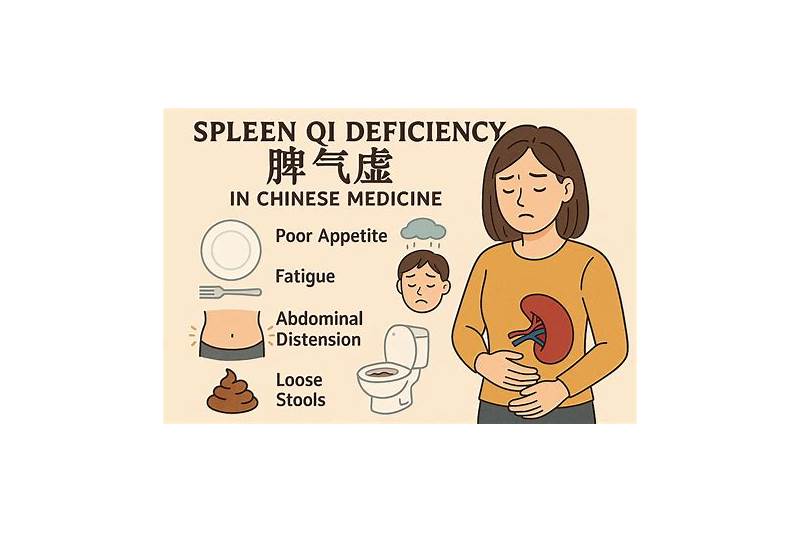
When the Spleen is strong, you have good appetite, steady energy, and firm stools. When the Spleen is weak, you feel bloated after eating, tired, and have loose stools.
2. Raises Qi
The Spleen lifts Qi upward, keeping organs in their proper place. When Spleen Qi is weak and fails to rise, you can experience a bearing-down sensation, hemorrhoids, or even prolapse.
3. Governs Muscles
The Spleen supplies nourishment to your muscles. Spleen Qi deficiency often presents as fatigue and weak limbs — that heavy, "I just want to lie down" feeling after a meal.
Why Spleen Qi Deficiency Is Common in the West
Modern lifestyle is tough on the Spleen:
- Cold, raw foods and iced drinks — The Spleen prefers warmth. Cold impairs its transforming function
- Refined sugar and dairy — These create Dampness, which burdens the Spleen
- Irregular eating — Rushing meals or skipping them weakens the Spleen over time
- Overthinking and worry — The Spleen is directly affected by excessive mental work and rumination
Signs of Spleen Imbalance
| Pattern | Key Symptoms | Tongue | Pulse | |:---|:---|:---|:---| | Spleen Qi Deficiency | Fatigue, bloating, loose stools, low appetite | Pale, teeth marks on sides | Weak | | Spleen Yang Deficiency | Cold abdomen, diarrhea, cold extremities | Pale, wet | Deep, slow | | Spleen Qi Sinking | Bearing-down sensation, prolapse, hemorrhoids | Pale | Weak | | Dampness Due to Spleen Weakness | Heavy limbs, brain fog, sticky stool | Greasy coating | Soggy |
Related Organ
Learn about the Lung in TCM.
Self-Care for Spleen Health
- Eat warm, cooked foods — Soups, stews, congee (rice porridge), steamed vegetables
- Eat regularly — Don't skip meals. Eat at similar times each day
- Add warming spices — Ginger, cinnamon, cardamom, fennel
- Spleen-friendly foods — Pumpkin, sweet potato, carrots, oats, millet, dates
- Avoid — Iced drinks, raw salads in cold weather, excessive sugar, dairy
- Mindful eating — Chew thoroughly, don't eat while working or scrolling
- Acupressure point — Stomach 36 (Zusanli, four finger-widths below the kneecap) for digestive strength
The Spleen in the Five Elements
The Spleen corresponds to the Earth element — the center that nourishes everything around it. Strong Earth (Spleen) supports Metal (Lung), controls Water (Kidney), and is controlled by Wood (Liver). This is why chronic stress can weaken digestion (Liver Wood overacting on Spleen Earth).
This article is for educational purposes only and does not constitute medical advice. Always consult a qualified healthcare professional before making changes to your health regimen.